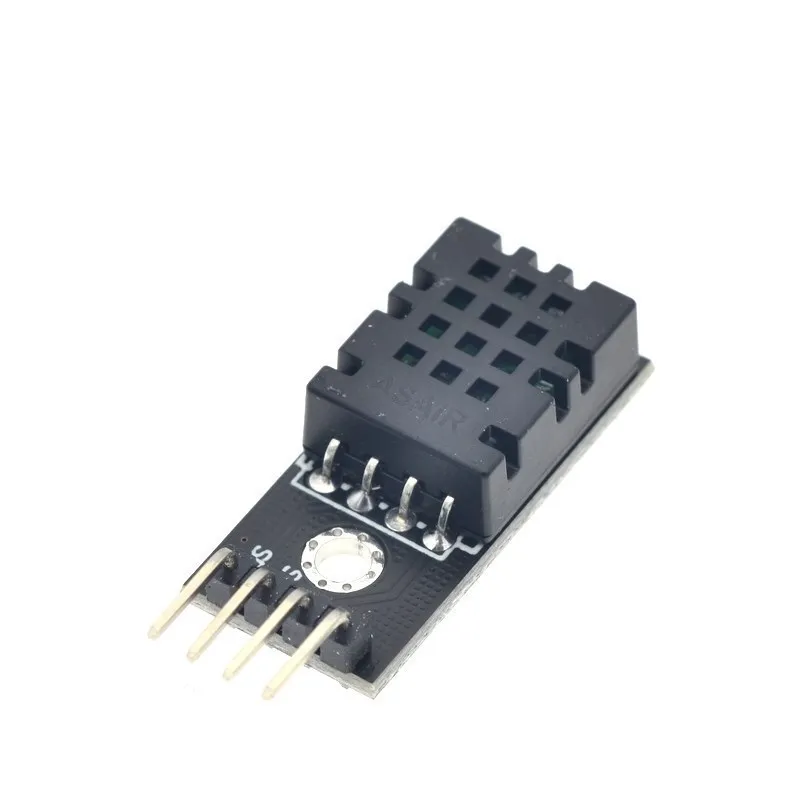
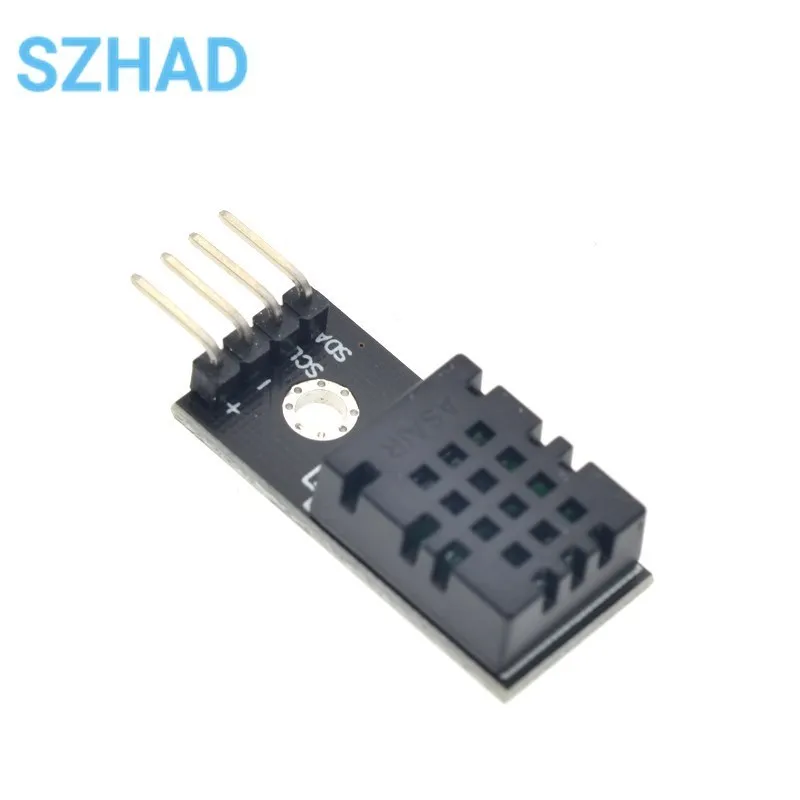
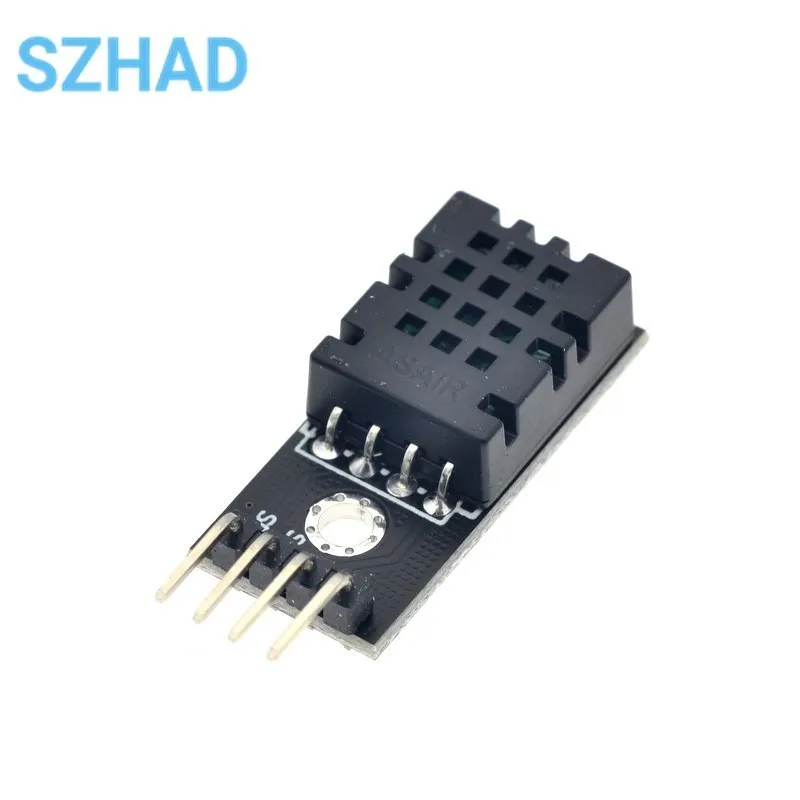
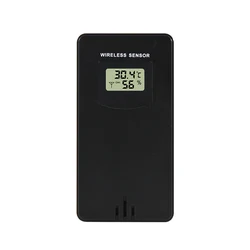
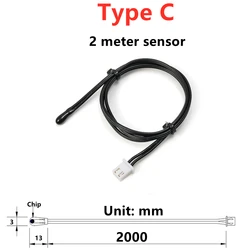
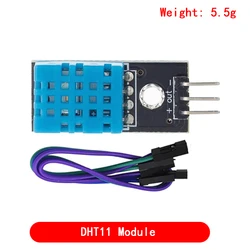
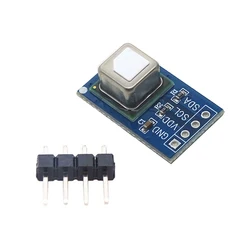
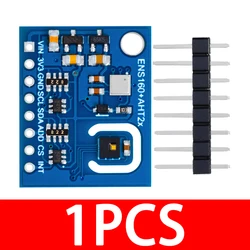
📦 DHT20 Temperature and Humidity Sensor is a state-of-the-art digital signal output module designed as an upgrade to the DHT11 sensor. This advanced sensor is characterized by its exceptional precision, low power consumption, and robust stability, all packaged in a compact form factor.
🔧 Key Features:
- High Precision & Low Power Consumption: The DHT20 offers reliable temperature and humidity readings with minimal energy usage, making it ideal for battery-powered applications.
- Data Output & Communication: Utilizing the IIC communication protocol, the DHT20 supports long-distance communication while ensuring high efficiency and stability in data transmission.
- Durable Construction: Manufactured from high-quality ABS material, the DHT20 boasts excellent impact resistance, heat tolerance, low-temperature endurance, and superior chemical and electrical performance. Its design ensures consistent product size and an aesthetically pleasing surface gloss.
- Fully Calibrated: This sensor comes fully calibrated for out-of-the-box accuracy, facilitating seamless integration into your projects.
- Long-Term Stability: The DHT20 is engineered for excellent long-term performance, providing trustworthy data readings over extended periods.
- Rapid Response & Anti-Interference: Experience quick response times paired with strong resistance to interference, ensuring reliable data output under various environmental conditions.
- Wide Voltage Support: Operating within a voltage range of 2.2 to 5.5 VDC, this sensor is adaptable for numerous applications.
💥 Pin Specifications:
🔒 The Sensor Data (SDA) pin plays a crucial role in data input and output. It is activated on the rising edge of the serial clock (SCL) and must be stable while SCL is high. The falling edge of SCL is where the SDA value can be modified. To ensure secure communication, it is recommended that the valid time for SDA be extended before and after respective SCL transitions. Upon data reading, SDA becomes active after SCL goes low, maintaining its state until the next SCL falling edge.
Additional Considerations:
- When integrating the DHT20 into your circuit, ensure that the power supply voltage for the host MCU aligns with that of the sensor.
- For enhanced system reliability, consider controlling the power supply to the sensor.
- Note that only a single DHT20 sensor can be connected to the I2C bus; other I2C devices cannot be used simultaneously.
- The power supply voltage range connecting the host MCU to the DHT20 should be maintained between 2.5 to 5.5 V.
- After powering on, allow the MCU to first supply power to VCC. The SCL and SDA lines can be set to high levels after a 5 ms delay for optimal performance.
💍 In conclusion, the DHT20 Temperature and Humidity Sensor is an ideal choice for projects requiring accurate environmental monitoring and data stability, accommodating both hobbyists and professionals alike.